
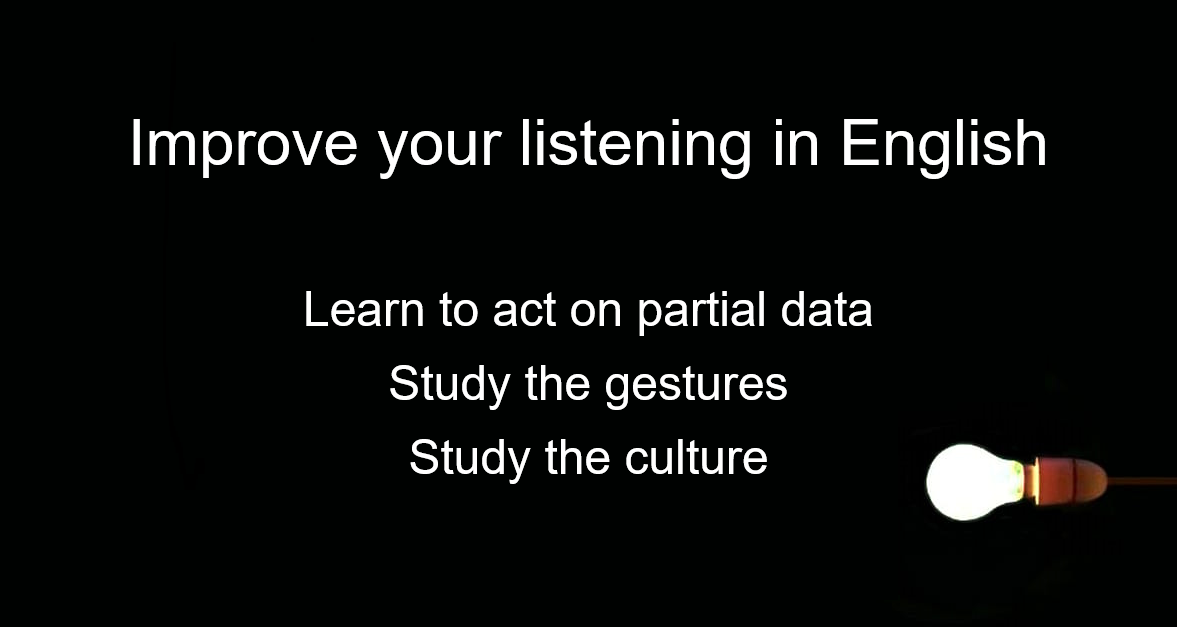
Understanding oral English is hard. There are many accents and words that are written differently but sound the same.
However, there are some aspects that affect comprehension but are not directly connected to pronunciation or accent.
Gestures
Fortunately, most gestures are international. Others, however, belong to more restricted cultures and can sometimes cause confusion.
What to do: ask your teacher for a lesson on common gestures in English speaking countries and practise them in class.
Cultural background
Sometimes it’s not the words you don’t understand but the cultural references. If you travel to Chicago and people mention buildings by name instead of address you won’t know where to find them on maps—so it’s always a good idea to read guides or watch documentaries on places you are about to visit. If you’re going to the Edinburg Jazz Festival check the programme beforehand to recognise theatre and band names.
What to do: anything you learn about local customs could be useful once you arrive at destination.
Acting on partial data
Unfortunately speakers will sometimes say things we have no idea about. We might be at a business meeting where colleagues start discussing yesterday’s baseball game. We neither know the rules nor the players. If it’s a conversation in a small group we can always ask for clarification but there’s a limit to that.
What to do? We can choose to switch off; or we can try to construct the message from incomplete data. Most speakers will pronounce important expressions differently so if you pay attention to words that are said louder, more slowly or mentioned after a pause you should be able to comprehend part of what people are saying.
Learn more about business English at www.andymiles.com